ChainAware Credit Scoring Agent: Real-Time Borrower Monitoring for DeFi

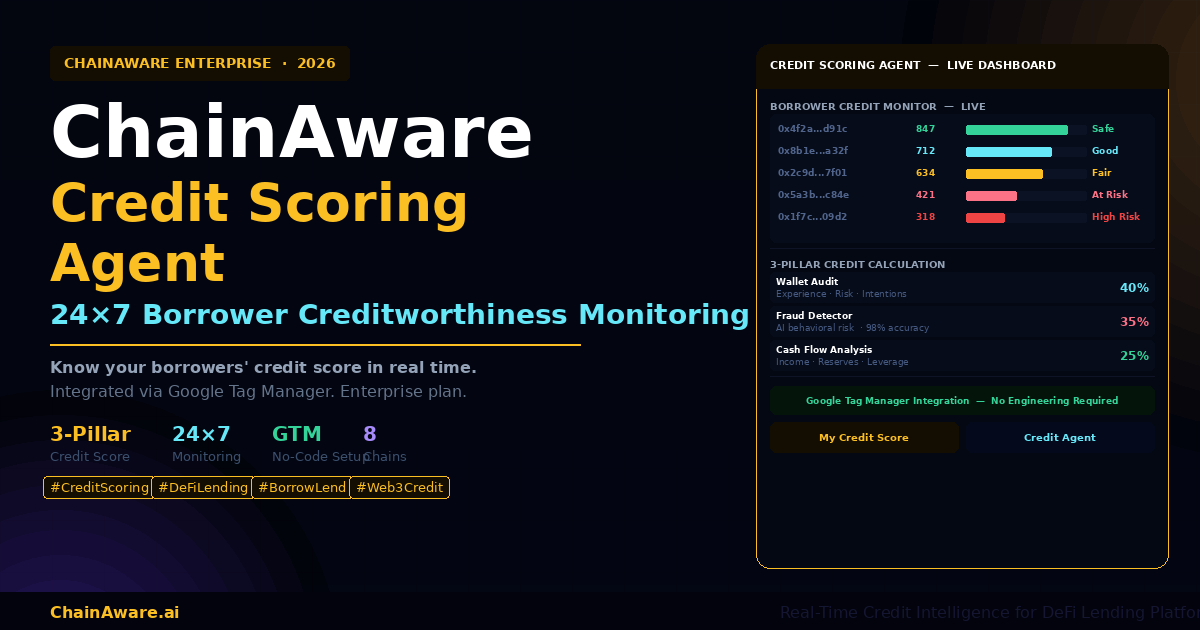
Borrower creditworthiness changes after a loan is issued – most DeFi protocols don’t notice until it’s too late. This guide covers ChainAware’s Credit Scoring Agent: 24/7 real-time borrower monitoring via Google Tag Manager, powered by a 3-pillar AI score combining Wallet Audit, Fraud Detection, and Cash Flow Analysis.
Why Crypto Trust Score Metrics Are Important

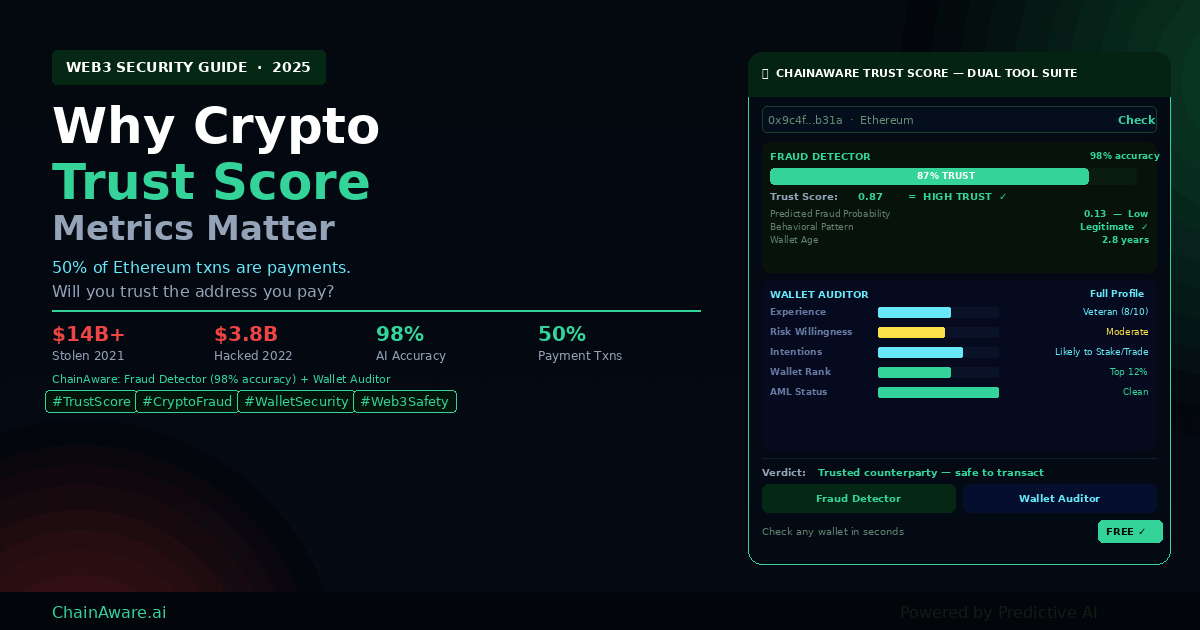
50% of Ethereum transactions are payments – yet the payment layer has almost no security infrastructure. This guide explains why crypto trust score metrics matter for real-time counterparty verification, how predictive fraud scoring differs from reactive blocklists, and why checking any wallet before transacting is the most important security habit in Web3.

Rug Pull vs Pump and Dump: How Crypto Fraud Extracts Wealth from Retail Investors (2026 Guide)

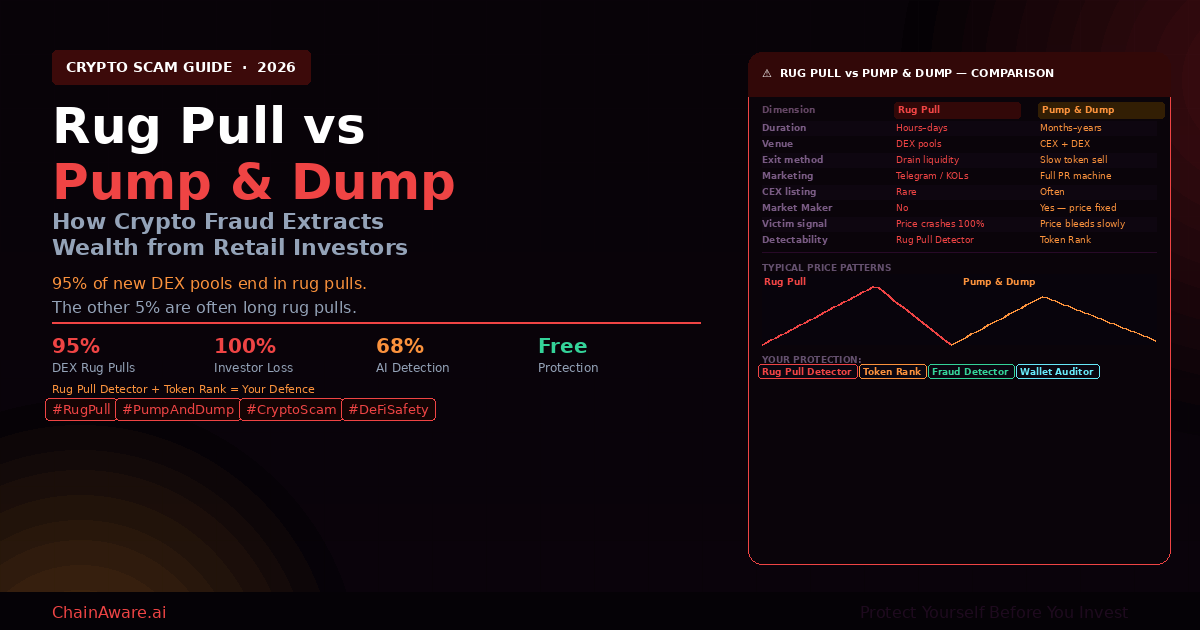
Rug pulls drain liquidity overnight – token worthless by morning. Pump and dump schemes extract value slowly over weeks through insider sell-offs. Both are engineered to maximize retail losses. This 2026 guide explains how each works, how to tell them apart, and which ChainAware tools detect each type before you invest.

Best Crypto Hardware Wallets in 2026 (Complete Guide)

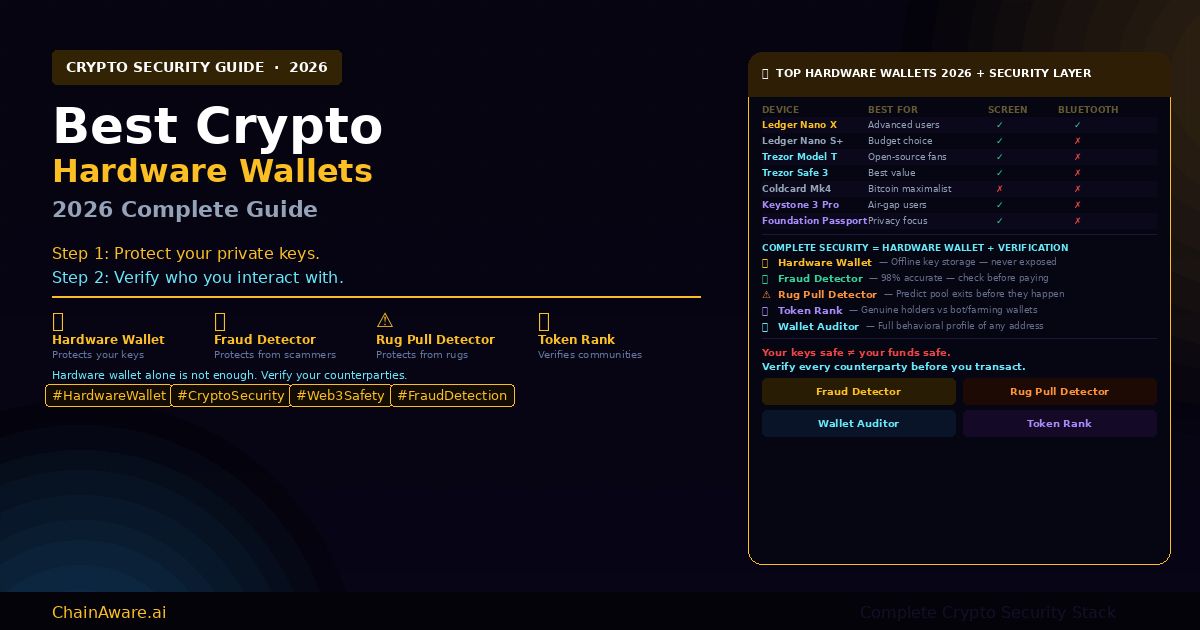
Hardware wallets protect your private keys – but that’s only half of crypto security. This 2026 guide reviews the top hardware wallets (Ledger Nano X, Trezor Model T, Coldcard Mk4, Keystone Pro, Foundation Passport) and covers the second half most guides ignore: verifying every counterparty before you send irreversible funds.

Crypto AML versus Crypto Transaction Monitoring: What’s the Difference and Why You Need Both

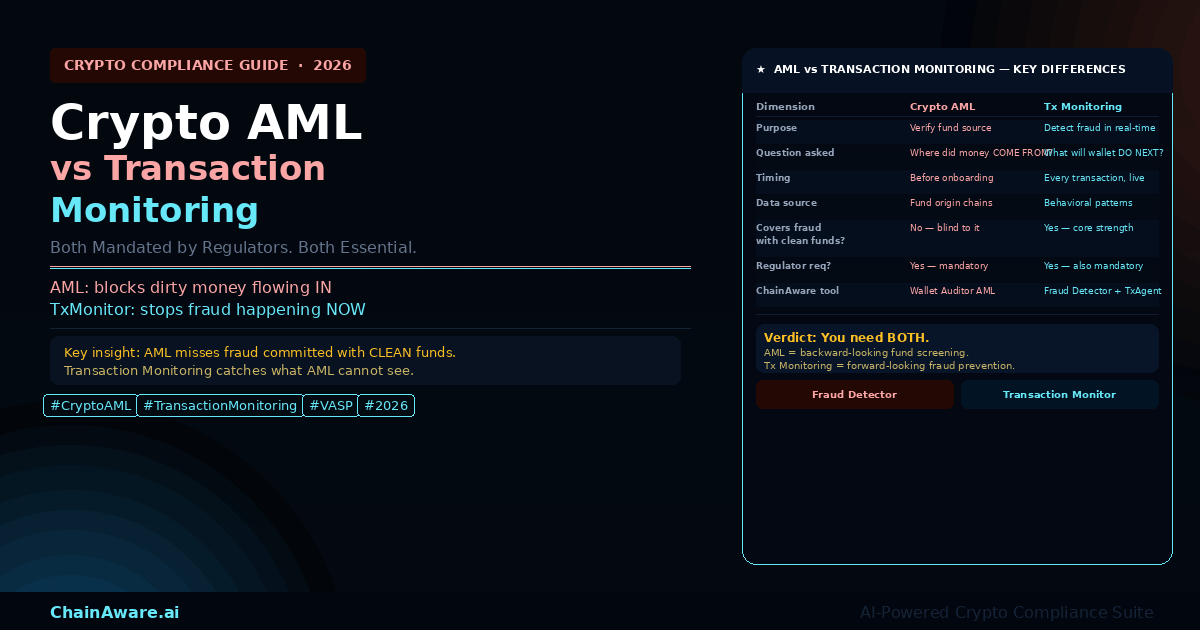
AML checks where funds came from. Transaction monitoring predicts what a wallet will do next. Most DeFi protocols run one but not the other – leaving a critical gap that sophisticated fraudsters exploit with clean funds. This guide explains the difference, the regulatory basis for both, and why you need them together.

How to Identify Fake Crypto Tokens in 2026: Rug Pulls, Long Rug Pulls, and DYOR

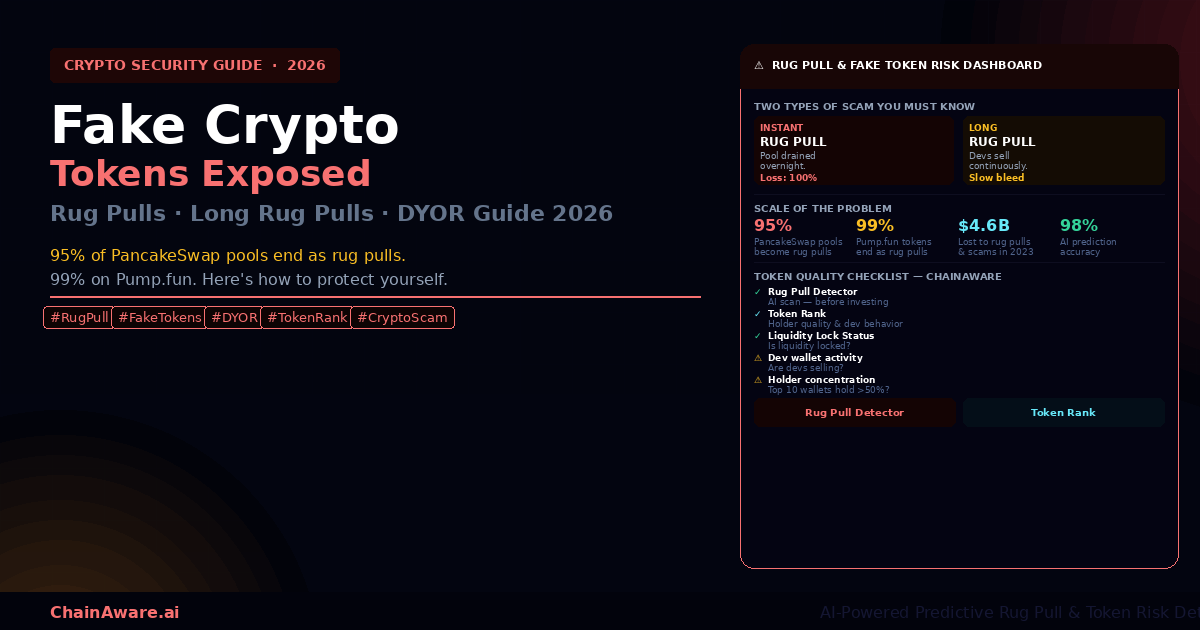
95% of PancakeSwap pools end as rug pulls. 99% of Pump.fun tokens extract money from buyers. This 2026 guide explains how to identify fake crypto tokens before investing – covering instant rug pulls, slow pump-and-dump schemes, the red flags to check manually, and which AI tools automate the detection for you.

Predictive AI for Web3: Growth and Security Without LLM Wrappers

95% of Web3 AI projects are LLM wrappers – unable to predict behavior, detect fraud, or power marketing agents. This guide, based on ChainAware co-founder Martin’s conversation with Plena Finance, explains what real predictive AI requires, why proprietary neural networks trained on labeled behavioral data are the only viable path, and where LLMs actually fit.

Enabling Web3 Security with ChainAware

ChainAware co-founder Martin covers the full platform origin story and AI architecture in this ChainGPT Pad AMA. ChainAware emerged from SmartCredit.io credit scoring – credit scoring required fraud scoring, fraud scoring proved more valuable in DeFi, rug pull detection followed. The accidental roadmap that became a 32-agent behavioral intelligence platform.

Web3 AdTech and Fraud Detection – X Space with Magic Square

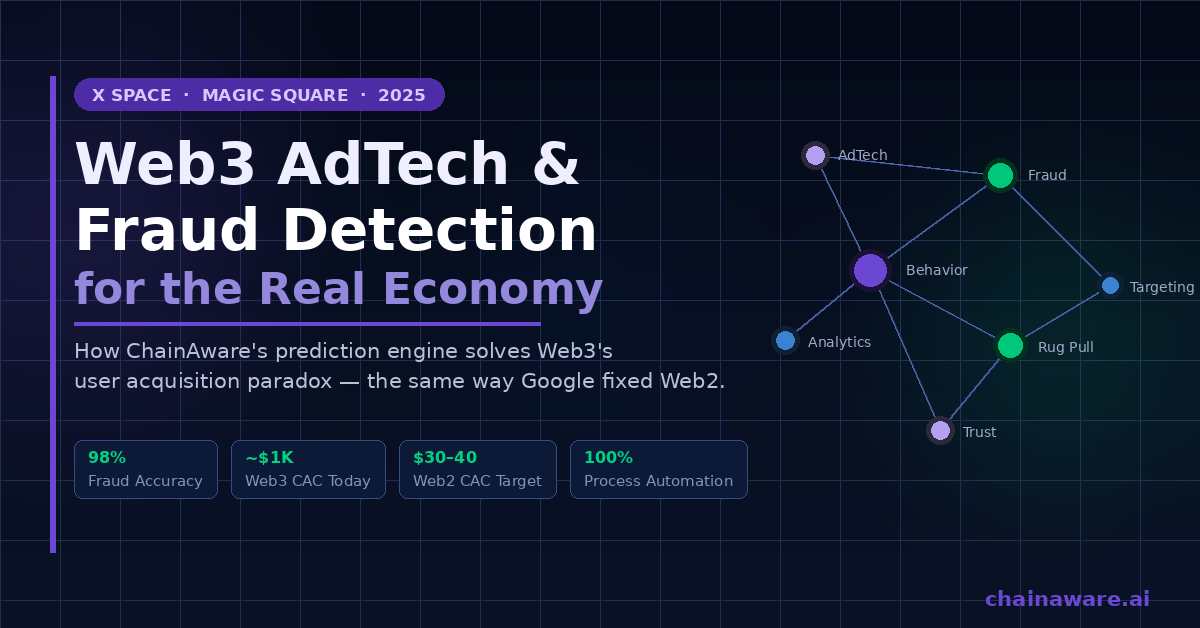
ChainAware co-founder Martin joins Magic Square to discuss Web3 AdTech and fraud detection for the real economy. Covers ChainAware’s origin from SmartCredit credit scoring through to fraud detection, rug pull prediction, wallet auditing, and Web3 AdTech – and why custom AI models, not LLM wrappers, are the only defensible IP moat in Web3.

AI-Based Wallet Audit: How Blockchain History Becomes Your Personal Brand in Web3

Blockchains are transparent at the transaction level but participants are anonymous – enabling scams, rug pulls, and social engineering. ChainAware Wallet Auditor solves this: a full behavioral profile of any wallet in one second. This X Space recap covers how on-chain history becomes personal brand and verifiable trust in Web3.